Chasing history, p.1
Chasing History, page 1


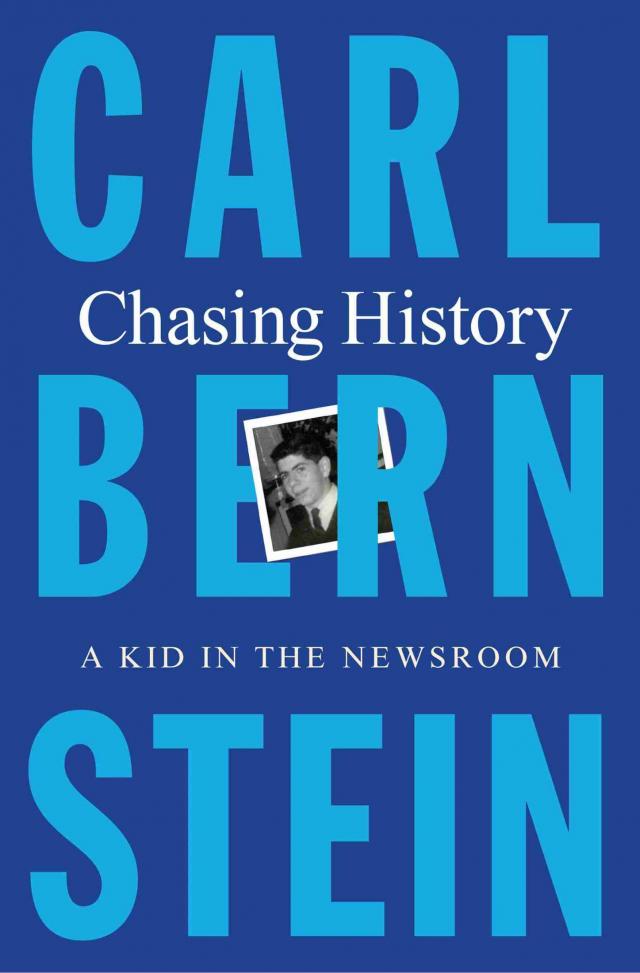
Begin Reading
Table of Contents
About the Author
Photos
Copyright Page
Thank you for buying this
Henry Holt and Company ebook.
To receive special offers, bonus content,
and info on new releases and other great reads,
sign up for our newsletters.
Or visit us online at
us.macmillan.com/newslettersignup
For email updates on the author, click here.
The author and publisher have provided this e-book to you for your personal use only. You may not make this e-book publicly available in any way. Copyright infringement is against the law. If you believe the copy of this e-book you are reading infringes on the author’s copyright, please notify the publisher at: us.macmillanusa.com/piracy.
For those in this book who put me on a path
And for Lance Morrow especially
And for Jeff Zucker
PROLOGUE
I needed a suit.
I had a proper suit, a winter one, but I had never owned a summer suit—a necessity in the immense heat of Washington, D.C., where most of the senators and congressmen from farther down south began dressing in whites and wearing straw hats in mid-April, not long after the cherry blossoms were done blooming. If I was now to enter the grown-up world of work in the nation’s capital, I would require a summer suit.
I meant to buy it at Woodward & Lothrop, the big department store on F Street. I had forty-five dollars in my pocket, saved up from my Saturday job at S. N. McBride’s layaway department store on the edge of Swampoodle, a ramshackle neighborhood the trains passed through as they slowed toward Union Station. After buying my suit, I hoped to ascend to a higher vocation: the newspaper business. I knew almost nothing about it, except that as a child I’d always read the sports section and the front-page news in the Washington Post. And at ages twelve and thirteen, after my family moved from the city to Silver Spring in the Maryland suburbs, I had a paper route delivering the final edition of the Evening Star from a red wagon.
On this June morning in 1960, I hitchhiked up Colesville Road to Georgia Avenue, and then I walked the half mile to the B&O railroad station diagonally across from the pool hall where on any other summer day (and too many during the school year) I was likely to be found.
I boarded the Capitol Limited, which carried me in air-conditioned luxury through Takoma Park and Northeast Washington, past Catholic University and the Old Soldiers’ Home, whose ancients, some still in uniform, looked up from their wooden chairs on the lawn and waved when the engineer blew his horn in tribute. I had read in history class that Abraham Lincoln summered each year of his presidency in a cottage at the Old Soldiers’ Home, when the heat downtown made life unbearable in the White House, which had been built over a swamp.
From Silver Spring, Union Station lay seven miles down the tracks, its marble colonnade facing the Capitol of the United States—worlds away from suburban Maryland, it seemed to me, though our next-door neighbor was a U.S. senator, Alan Bible of Nevada. The senator’s sons Billy and Paul were my schoolmates. Their father was something like the emperor of Washington, D.C., by virtue of being chairman of the Senate Committee on the District of Columbia.
Union Station was magnificent, modeled on some famous Roman baths, as the tour guides liked to point out. Usually when I took the train downtown, I’d linger in the station’s pinball room, adjacent to the USO lounge, and test my skill at the machines until I’d exhausted a shotgun roll of forty nickels. That might take a couple of hours on a good run.
But on this day I headed straight for the streetcar up Pennsylvania Avenue, getting off at Tenth Street and then walking past Ford’s Theatre and the house across the street where Lincoln died. Downtown Washington was territory I’d known from the time I was a small child. My father’s old office, the one he’d had at 930 F Street until it was closed down during the Joe McCarthy business, was around the corner from where Lincoln was shot. And a few blocks west, at Fourteenth Street, was Garfinckel’s department store, where my grandfather—my mother’s father—had gone to work as a cuffer in the men’s tailoring department after he got off the boat from Russia. Next to Garfinckel’s, F Street stopped abruptly at the Treasury Department—adjacent to the White House, which my class from grammar school visited almost every year. My maternal great-grandmother, a tiny woman with shriveled skin, still lived downtown, on Seventh Street, just beyond the big department stores, atop a little photo studio where the youngest (and strangest) of her five children snapped portraits, sometimes of congressmen or a clutch of local businessmen.
I’d been disoriented by our move from the city to the suburbs. The jumble of downtown Washington, where the shrines and emblems of the nation gleamed next to squat mercantile buildings and faded antebellum rooming houses, had for me an enchantment of familiarity. I’d turned sixteen on Valentine’s Day and felt much more adult now, with a work permit in my wallet and my underage employment at McBride’s—technically illegal, like some of its layaway interest rates—behind me as well.
I walked past the sooty Hotel Harrington and the television studios of WTTG and the DuMont network, where every couple of weeks I danced on The Milt Grant Show with other teenagers—white ones, because the Black kids danced on a different day of the week. Woodward & Lothrop, my destination, was a turn-of-the-century pile that Washingtonians called Woodies. It was the biggest department store in the city and took up a full square block.
My mother and father, in the early 1950s, had taken me with them to join the sit-ins at Woodward & Lothrop to desegregate its Tea Room. In those days, Union Station was the only place downtown, besides the government cafeterias and a few others owned by a man named Evan Sholl, that would serve Black customers at tables. They could stand and eat at the lunch counters inside the dime stores and department stores but were forbidden to sit.
On F Street, a block from Woodies, a legless vendor of pencils worked his turf on a dolly with roller-skate wheels, propelling himself with his hands and arms while a pet monkey held tight to his shoulder. I’d seen the man many times and had wondered about him. Flush with cash this day, I asked him for two pencils. I extended a quarter.
It was not often that I towered above the person I was talking to—or his monkey. The vendor seemed gabby, wanting to talk. He asked me where I was going, and I told him I was heading to Woodies to buy a suit. He was wearing tattered pants that had been cut off and sewn or folded somehow to cover the stumps of his legs. He suggested that perhaps I’d like to buy half a dozen pencils. He asked my name, and when I told him, he brightened and said his name was Bernstein too, Eddie Bernstein, which made me suspicious, and that his monkey was named Gypsy, which sounded about right.
To prove he was Eddie Bernstein he produced his vendor’s identification, then asked which Bernsteins I was from. I was sure we weren’t related; there were no Bernsteins outside our immediate family who were kin that I’d heard of. Plus, this Eddie Bernstein said that his family was from Florida. He asked how much I wanted to spend on a suit. I told him maybe forty dollars.
“You should go see my friend Louie,” he said. “No-Label Louie.” He was insistent, but in a friendly way. He said that Louie sold suits at a steep discount, probably half of what I’d pay at Woodies, and that if I asked for Louie himself and told him Eddie Bernstein had sent me, I’d get an even better deal. I’d brought along a picture of a blue cord summer suit I liked, clipped from the pages of a magazine, though I didn’t show it to him.
He pointed east and said Louie’s store was on D Street near the intersection of Seventh, a patch I knew well because my great-grandmother and the photo studio were almost around the corner. I bought four more pencils from Eddie Bernstein and headed down the street, past my father’s old union office.
Louie Goldstein’s “haberdashery,” as its owner referred to his store when I walked inside, was conspicuous from the sidewalk because of its big electric sign—unusual downtown, where almost everything shut down by six o’clock in the evening except for a few restaurants and bars, and the peep show movies and burlesque house on Ninth Street. Louie was wearing a beret (something else not often seen in the neighborhood) and smoking a cigar. Eddie had been truthful about the quantity of suits. There were thousands of them, maybe five or six thousand, rack after rack, stacked halfway to the ceiling from the front of the store to the back. In one aisle, there was just enough space for a two-sided placard with pasted photos of well-dressed customers: NO-LABEL LOUIE’S—WE WON’T BE UNDERSOLD! One of the pictures showed the Senate majority leader, Lyndon Johnson, in a suit by Louie.
I told Louie I wanted a cord suit for the summer, which he agreed was just right for someone my age, and after he’d taken the tape measure that was draped from his neck and determined my size, he came back with three or four. One was almost cream-colored, not blue. Looking closely, I could see that the stripes were light brown. This suit would look best on me, Louie said, because I had so many freckles.
He had me stand on a box in front of a three-way mirror, the same way my grandfather did when he’d fit my clothes in his tailor shop (which was hardly bigger than Louie’s dressing room). Louie was right that the cream-colored suit looked best.
I could have the suit for twenty-five dollars, no questions asked, including alterations. I was thinking I should take the suit to my grandfather, who was a master tailor. But Louie said his man in the back could do it on the spot if I wanted, nothing needed to be taken in, just the pants cuffed and a button on the waistband moved a little bit, and he would sell me a tie that went with it for two dollars.
While he pinned the pants, I told him about my grandfather, and about my grandmother, who worked the sewing machine in the shop. Meanwhile, Louie expounded on the no-label concept and his eye for excellence, and about his own grandfather, who’d gotten off the boat in Baltimore in the 1850s, and how the business had prospered during the next decade by making uniforms for Union soldiers.
When the suit was ready and I tried the whole outfit on, I quite liked the look. I decided right then that I would wear it out of the store—and with the money I’d saved, I’d go to lunch at the Occidental Restaurant next door to the Willard Hotel near the White House.
On afternoons when our dancing was done and The Milt Grant Show had signed off, I’d always stop to buy a newspaper from the stout woman who fed the pigeons and gave treats to children at her newsstand at Eleventh Street, in front of the old Evening Star Building—the tallest structure on Pennsylvania Avenue except for the Old Post Office Tower. “Annie” was the only name I’d ever heard her called, and she never had much to say, except to the pigeons, but she often greeted her regular customers by name. She invariably addressed me as “young man,” as she did on this day.
The Star Building was shuttered now; the paper had moved the previous year to new offices and a modern printing plant in Southeast Washington. Standing outside the old building made me think about what I might say at my job interview the following week at the paper. I hoped it would lead to getting my foot in the door there, and maybe put my life on a different track.
I was also thinking about lunch.
The Occidental Restaurant wasn’t the kind of place women or families went to in the daytime; it felt more like an old-fashioned gentleman’s club. I’d been there more than a few times with my father. We’d order oysters or clams fresh up from the Chesapeake, and crab cakes or, in the spring, shad roe from the Potomac. I’d never been to the Occidental by myself, but the host at the door seemed to think nothing of sitting me down at a choice table near the window, no different from the other men in their summer suits. He led me past the framed photographs on the wall that the restaurant was famous for, signed by presidents and congressmen and senators and generals and cabinet secretaries going back to when the Willard Hotel first opened. Abraham Lincoln stayed at the Willard the night before his inauguration, and Ulysses S. Grant bunked there when he came to town to consult with the commander in chief.
After the maître d’ had seated me and I’d tucked the white cloth napkin in my lap and looked around, I saw that J. Edgar Hoover, the FBI director, whose picture was prominent in the entry gallery—and who like me and my mother had been born not far from this part of town—was eating lunch by himself in one of the booths. I hadn’t realized how much his face looked like a bulldog’s. He had a barrel chest and small hands, which I noted on a piece of paper with one of the pencils I’d bought from Eddie Bernstein.
I didn’t want to give myself away by staring, so I read the copy of the Star I’d bought from Annie, which at that moment was filled with news about the coming presidential election between John F. Kennedy and Richard M. Nixon.
1
THE DOOR
My becoming a copyboy was really my father’s doing. He rightly feared for my future—a concern that was based on hard facts, most of them having to do with the pool hall, my school report cards, and the Montgomery County Juvenile Court. It was the opinion of experts at all three institutions that the odds were against my ever amounting to much. Selling shoddy merchandise on layaway to poor people from Swampoodle was another reason my father wanted to steer me toward more respectable work.
There had been no father-and-son discussion about my difficulties, unless you counted the time he told me how he had struggled and saved to get through college during the Depression. My father’s eyes had filled with tears as he told the story. It was the only time I ever saw that happen at home, though it was not uncommon for his eyes to glisten when he marched on a picket line. My father was, until recently, the principal organizer of the United Federal Workers / United Public Workers of America and was regarded as a saint by the people to whom he devoted his life. These were not the circles favored by the Washington Evening Star, the town’s “conservative” newspaper.
But my father’s preference for the Star—over the far more liberal Washington Post—went deep. In a company town in which the federal government was the company, being the government columnist was a position of importance, and the Star’s Joseph Young had covered a strike by my father’s union with fairness and faithfulness to the facts. Whereas the Post’s Jerry Klutz (his actual name) had been more intent on uncovering if the union’s leaders included members of the American Communist Party and, by inference, what role Moscow had played in determining whether U.S. government cafeteria workers should get their pay raised to a dollar an hour.
My father became a source for Joe Young. And it was Joe Young who said a word to Rudy Kauffmann and got me a job interview at the Star.
Rudolph Max Kauffmann II was the grandson of the first president of the Evening Star and cousin of the current one. Though his title was production editor, he was sometimes called the Clown Prince, which, later on, I came to think was unfair and more than a little cruel. As a youth, he had wanted to become a geologist, but after four years of Princeton his father had put an end to that dream and ordered him to join the family business. Rudy complied, but his career at the paper was not a glorious one. Basically, he hired the copyboys and, from a fair distance, was responsible for their supervision. His portfolio included the Star’s generous civic and charitable programs that served the city’s children and the poor.
“That’s quite a suit you got yourself, boy.”
Rudy Kauffmann wore half spectacles, and he looked down his nose to see me. He had a friendly face.
I thought I was pretty well turned out, in my cream-colored suit and the pickle-colored tie Louie had selected for me. But Rudy Kauffmann seemed to have his doubts.
“Boy, I thought your dad told Joe Young you were almost finished high school?”
“Sir, I’ll be in twelfth grade this coming year,” I replied. I told him that I’d turned sixteen in February, but he still looked skeptical.
Before taking the elevator to his office on the third floor, I’d lingered in the lobby and studied a mural testifying to the Star’s long witness to history. There were front-page headlines—LINCOLN ASSASSINATED, SENATORS WIN PENNANT, UNITED NATIONS BORN, SURRENDER: JAPS STRIPPED OF CONQUESTS—and pictures of General MacArthur and Charles Lindbergh and presidents, kings, and queens posing with members of the three families who had owned and run the paper almost since its founding in 1852: the Noyeses, the Adamses, and the Kauffmanns. In some of the photos, the owners were standing next to the presses and were wearing funny little hats made out of folded newspaper pages. On an office directory posted in the lobby, the names of the families were all mixed up with one another by the time of Rudy Kauffmann’s generation; there were Noyeses and Kauffmanns listed in almost every department, including some executives with both names.
To catch up with the second half of the twentieth century and get the paper out to the suburbs faster, the Star had moved from downtown to its brand-new building at 225 Virginia Avenue on the edge of Capitol Hill, a state-of-the-art news production facility, all cinder block and concrete except for two floors of picture windows in the front.
“I thought Joe Young said you were in high school,” Rudy Kauffmann said again.
The immediate problem, I gathered, was that I was too short to be a copyboy. Or too young, or too young-looking. Not only was I five foot three (and still growing), I was freckled from head to toe. One summer I’d smeared a whole bar of butter over my face because the man who pumped gas at the Tenleytown Amoco station told me—while I filled up my bicycle tires—that the butter would make my freckles go away.
The bookcase behind Rudy Kauffmann contained what looked like a century’s worth of leather-bound volumes of the Proceedings of the Geological Society of America, and the top of his desk was covered with crystals and other geological specimens. Some were cut open down the middle like cantaloupes, and as he spoke, he ran his fingers along the veins where it looked like the fruit had been scooped out.